Hair loss is a common concern that affects confidence, appearance, and overall self-image. Modern aesthetic medicine offers several solutions, but two of the most discussed treatments are hair transplant surgery and platelet-rich plasma therapy. Understanding how each works, who benefits most, and what results to expect can help you make a confident and informed decision.
Understanding Hair Transplant Treatment
A hair transplant is a surgical procedure that relocates healthy hair follicles from a dense growth area, typically the back or sides of the scalp, to regions experiencing thinning or baldness. The transplanted follicles are genetically resistant to hair loss, which allows them to continue growing naturally in their new location. This method is considered a permanent solution for pattern baldness because it directly restores hair density in areas where follicles are no longer active. The procedure is carefully planned to match natural growth patterns, ensuring realistic and long-lasting results.
Understanding PRP Therapy for Hair Loss
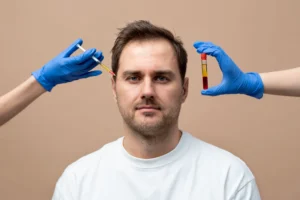
Platelet-rich plasma therapy is a non-surgical treatment that uses the body’s own healing components to stimulate hair growth. A small sample of blood is processed to concentrate platelets rich in growth factors. This plasma is then injected into targeted areas of the scalp to improve blood supply, strengthen hair follicles, and encourage thicker hair growth. PRP does not create new follicles but revitalizes weakened ones, making it particularly effective for early stages of hair thinning and hair weakening.
Key Differences Between Hair Transplant and PRP
Hair transplant surgery physically restores hair by moving follicles to bald areas, while PRP focuses on improving the health and performance of existing follicles. Transplant results are typically permanent because they involve relocating resistant follicles, whereas PRP requires maintenance sessions to sustain benefits. Recovery expectations also differ, as transplantation involves minor surgical healing while PRP usually allows a quick return to daily activities. The choice often depends on the severity of hair loss, expectations for density, and preference for surgical or non-surgical care.
Who Is an Ideal Candidate for Hair Transplant
Individuals with moderate to advanced hair loss who have sufficient donor hair are generally strong candidates for transplantation. This option is often recommended when hair follicles in certain areas are no longer capable of regrowth. Those seeking a long-term, structurally restorative solution typically prefer this approach, especially when hairline reconstruction or significant coverage is required.
Who Benefits Most from PRP Therapy
PRP therapy is most suitable for individuals experiencing early thinning, reduced hair strength, or slowed growth rather than complete baldness. It is also commonly chosen by those who prefer minimally invasive treatments or who want to enhance the results of other hair restoration methods. Patients looking for gradual improvement in thickness and hair quality often find PRP appealing due to its natural and regenerative approach.
Effectiveness and Expected Results
Hair transplant procedures can deliver visible density improvement once transplanted follicles establish growth, usually within several months. Results continue to mature over time as the hair cycles naturally. PRP therapy produces more subtle changes, often improving hair texture, thickness, and overall vitality. While both treatments aim to enhance appearance, transplantation offers structural restoration, whereas PRP focuses on biological stimulation.
Safety and Recovery Considerations
Both treatments are generally safe when performed by qualified professionals. Hair transplant recovery involves temporary redness or mild discomfort as the scalp heals. PRP therapy typically involves minimal downtime with temporary sensitivity at injection sites. Choosing a skilled specialist ensures proper technique, realistic planning, and optimal outcomes regardless of the selected method.
Cost and Long-Term Investment
Hair transplant treatment usually requires a higher upfront investment but provides long-lasting results. PRP therapy is often less expensive per session but requires repeated treatments to maintain improvements. Evaluating long-term goals and maintenance preferences plays an important role in determining overall value.
Conclusion
Choosing between a hair transplant and PRP therapy depends on the stage of hair loss, desired outcome, and personal treatment preference. Hair transplantation offers a permanent and structural solution for significant hair loss, while PRP therapy provides a non-surgical approach that strengthens existing follicles and enhances hair quality. Both treatments have proven effectiveness when matched with the right candidate and performed with professional expertise. A personalized consultation with a qualified specialist remains the most reliable way to determine which option aligns best with your goals for natural, confident hair restoration.
Frequently Asked Questions
What is the main difference between a hair transplant and PRP therapy?
A hair transplant surgically moves healthy hair follicles to bald areas to restore growth permanently, while PRP therapy stimulates existing follicles to improve thickness and strength without surgery.
Which treatment provides permanent results?
Hair transplant treatment is considered permanent because transplanted follicles continue to grow naturally, whereas PRP therapy requires maintenance sessions to sustain improvements.
Is PRP therapy painful?
PRP therapy involves mild discomfort from injections, but it is generally well tolerated and does not require significant recovery time.
How long does it take to see results after a hair transplant?
Initial growth typically begins within a few months, with fuller and more natural results developing gradually over time.
Who is the best candidate for PRP therapy?
Individuals experiencing early hair thinning, weakened hair, or slow growth are usually ideal candidates for PRP therapy.
Can PRP be combined with a hair transplant?
Yes, PRP therapy is often used alongside hair transplant treatment to support healing and enhance hair growth outcomes.
Is there downtime after a hair transplant procedure?
Hair transplant recovery involves short-term redness or mild swelling, but most individuals return to normal activities within a limited period as advised by their specialist.
How many PRP sessions are usually required?
Multiple sessions are typically recommended initially, followed by periodic maintenance treatments to preserve results.
Are the results of PRP therapy natural looking?
Yes, PRP enhances the body’s natural hair growth process, resulting in gradual and natural-looking improvements.
How do I decide which treatment is right for me?
The best choice depends on the severity of hair loss, desired results, and medical suitability, which can be determined through professional consultation and scalp evaluation.
Contact Us:
Branch Name- 1. Everglo Aesthetic
Address : No:2/638, East Coast Rd, Chinna Neelankarai, Saraswathy Nagar North, Neelankarai, Chennai, Tamil Nadu 600115
Contact : 098844 01282
Google Map- https://share.google/1ZxFsmtOa9u4cQElp
Website : https://evergloaestheticclinic.com/
Branch Name- 2.Everglo Aesthetic
Address : Second Floor, 122, Chennai – Theni Hwy, Lakshmi Nagar, Shanthi Nagar, Chromepet, Chennai, Tamil Nadu 600044
Contact : 9884401282
Googlemap : https://share.google/Qi1cx9EMgmrvmdUvs
Website : https://evergloaestheticclinic.com/
Branch Name- 3.Everglo Aesthetic
Address : Second Floor, Shop No: SF-3, A.N. Plaza, 13/6 & 13/6A, Thiruvalluvar Salai, Perumal Nagar, J J Nagar, Mogappair, Chennai, Tamil Nadu 600037
Contact : 098844 01282
Website : https://evergloaestheticclinic.com/
Google Map : https://share.google/s9iRcnF1yGTJA83OG